Services About Team Get in Touch
LIGHT
CONFIDENTIAL
Research & Development — Security Solutions

We find
what others
miss.

DarkCov works at the edge of what's known. Most firms cover the obvious ground. We start where they stop. Our engagements are confidential, our approach is hands-on, and the work we do exists in spaces that don't get written about publicly._

16+
CVEs Discovered
$32.791B
Infrastructure Secured
Research & Development
Security Solutions
Vulnerability Research
Exploit Development
Defensive Architecture
Threat Intelligence
NDA-Protected Engagements
Advisory & Consulting
Research & Development
Security Solutions
Vulnerability Research
Exploit Development
Defensive Architecture
Threat Intelligence
NDA-Protected Engagements
Advisory & Consulting
0+
CVEs
Discovered
5
Nations
Served
$32.791B
Infrastructure
Secured
NDA
Non-Negotiable.
Every Engagement.
What We Do

Built for problems
without a manual.

We don't have a service menu. We have capability, and we apply it to whatever the problem actually is. The work spans multiple domains and branches simultaneously. Scope is defined by the problem, not by a package tier.

01
Research & Development

This is the core of what we do. Original research across technical domains, building tools, finding things, and turning findings into something that matters in the real world.

Original ResearchApplied ScienceTechnical Depth
02
Vulnerability Research

We find what others assume doesn't exist. The approach is adversarial, thorough, and researcher-driven. We cover the surface area most teams never get to.

VRExploit DevDisclosure
03
Security Solutions

For organizations that need real answers, not reports that sit on a shelf. We work with decision-makers directly to build defenses that actually reflect the threat landscape.

AdvisoryArchitectureConsulting
04
Threat Modeling & Analysis

We map real adversaries to real systems. Attack surfaces, threat vectors, risk prioritization, grounded in current intelligence rather than generic frameworks.

Threat IntelRisk AnalysisAttack Surface
05
Deep Technical Auditing

Manual review. Researcher-driven. We go into the places automated tools skip over, and we come back with exploit chains, root cause, and clear remediation.

Manual ReviewBinary AnalysisSource Audit
06
Confidential Engagements

Some of the most meaningful work we've done can't be named here. That's not a limitation, that's the point. Discretion isn't a setting we turn on, it's the default state.

NDA-StandardZero DisclosurePrivate Scope
Why DarkCov

We operate where
others don't.

Researchers First, Firm Second

DarkCov wasn't built by founders who decided to start a security company. It was built by researchers who were already deep in the work. Jabr and Meshaal had results before they had a name. The firm is infrastructure for the research, not the other way around.

Proven Before Prominent

CVEs filed, vulnerabilities disclosed to major organizations, tooling built and released, talks given at premier security conferences. We had a track record before we had a presence. We didn't start talking until there was something real to say.

Multi-Front by Nature

Most firms pick a lane. We naturally span multiple simultaneously, offense and defense, binary and web, hardware and software, research and deployment. That's not a positioning statement, it's just how both of us ended up working.

Discretion as Default

Confidentiality isn't a policy added on top of how we work. It's embedded in it. Clients engage with us knowing their exposure is zero. We don't reference past work. We don't need to. The people who matter already know.

Built for Complexity

We're drawn to the problems that are hard enough to be worth solving. Low-level systems, memory internals, cryptographic analysis, adversarial research across domains. We're comfortable in environments where most teams need a map just to get started.

No Overhead. All Signal.

Small team, intentionally. You talk directly to the people doing the work because they're the same ones who scoped the engagement. No account managers, no translation layer, no dilution. Just the research.

The Team

The minds
behind DarkCov.

JBR ID:001 // FOUNDER
Founder & Lead Researcher
Jabr

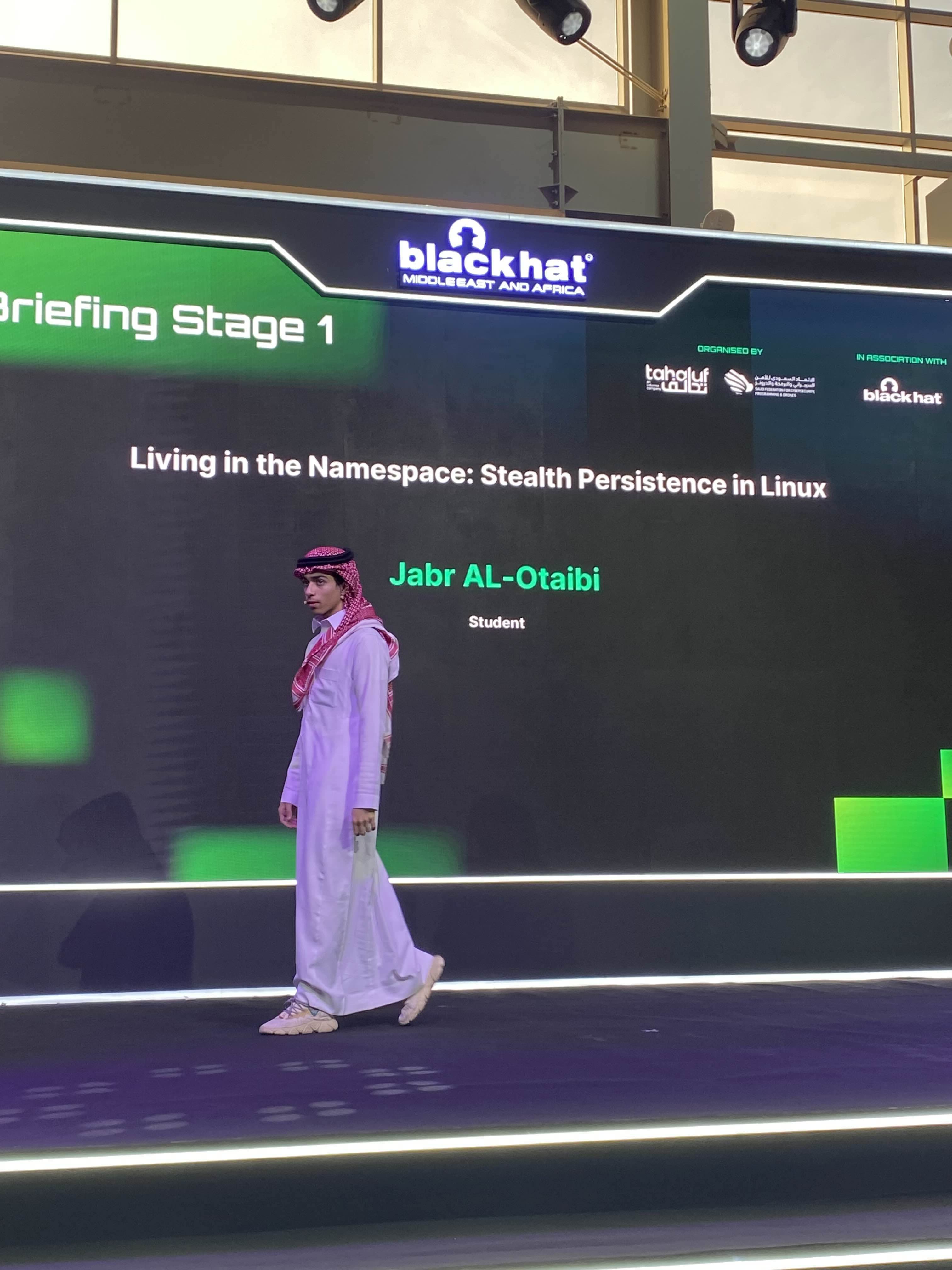
I got into vulnerability research early. By 15 I had 7+ CVEs published and had reported 10+ critical vulnerabilities in real organizations. At 16 I presented original exploitation techniques at Black Hat MEA, which was honestly surreal but also just the next step from the work I was already doing.

My focus is Reverse Engineering, Vulnerability Research, and Exploit Development. I built Jinzear to deobfuscate Lua bytecode in MiWiFi firmware because I needed it and it didn't exist. I've run fuzzing campaigns against engines and protocols that uncovered memory corruption bugs, several of which I can't publish yet for obvious reasons.

DarkCov exists because the research reached a point where it needed structure around it. So I built that too.

Reverse Engineering Exploit Dev Vuln Research BHMEA Speaker Fuzzing
MESH ID:002 // CO-FOUNDER
Co-Founder & Security Researcher
Meshaal

I started in web security, went through Hack The Box, picked up eWPTX and CWES, spent a while deep in CTFs and placed first in a national competition in Bahrain. That was fun, but it eventually pointed me toward what I actually wanted to work on: binary security.

Now most of my time goes into fuzzing and manual source auditing of C/C++ codebases, finding memory corruption bugs in real software. I've disclosed vulnerabilities to GIMP and Git, contributed findings to the Linux kernel, and built Wendigo, an open-source crash triage tool for automated exploitability analysis.

I also care a lot about math, which I think shows in how I approach research. I'm still learning, still pushing into harder problems. That part doesn't really stop.

Binary Security Fuzzing Cryptography Linux Kernel Wendigo Creator
ANAS ID:003 // SECURITY RESEARCHER
Security Researcher & Web Research Lead
Anas

I came up through web security and never left. My focus is web application exploitation hunting logic bugs, bypassing filters, and chaining vulnerabilities for real impact. No scanners, no automation crutches. Everything I find comes from reading source and understanding how systems actually behave. That approach has led to 6 CVEs so far, all from manual analysis.

A lot of my time goes into Chromium's source code tracing cross-origin oracle behaviors, cache partitioning mechanics, and frame lifecycle internals — then turning that research into technical write-ups that go deeper than surface-level explanations. On the server side, I read through the source of well-known open-source web projects, mapping how they work under the hood to find where things break.

In CTFs I compete across web exploitation, reverse engineering, and browser exploitation. The browser is where most of my research lives. It's the attack surface everyone uses but few people actually understand.

Web Exploitation Browser Internals Wizard CTF Competitor 6+ CVEs Web Security Researcher
? ID:004 // [REDACTED]
[Redacted]
Marco

██████████████████████████████████████
██████████████████████████████████████
██████████████████████████████████████

If you know, you know. If you don't, you weren't supposed to.

█████████ █████ ██████████
// Confidential by default

Let's talk about
what you can't
talk about.

If the problem is sensitive, technically deep, or just unsolved, reach out. First contact is confidential. So is everything after it.

Initiate contact